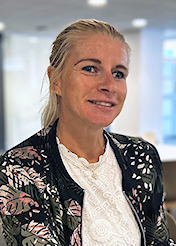
As a manager, it is easy to focus on employees, the business and results. But to be able to lead sustainably over time, your own health also needs space. Falck’s health developer, Åsa Miemois, highlights the importance of pausing and reflecting on your own wellbeing.
When the pace picks up, it is easy to keep moving forward without stopping to reflect on what is actually affecting your energy, focus and recovery. That is why it can be valuable to create a personal sustainability plan – a simple way to identify what you need to feel well and function sustainably over time in your role.
“Personal sustainability is not a state you reach and then are done with. It is something you need to manage continuously, especially when demands are high,” says Åsa Miemois, Health Strategist at Falck.
A sustainability plan is not about doing everything perfectly. It is about creating the conditions to make good decisions, maintain focus and still have energy left – even during periods when a lot is happening.
Start by understanding your workload
Workload is not just about long working days or a full schedule. For many managers, it is the mental load that takes the most energy: responsibility, decisions, interruptions, difficult conversations and high expectations from several directions at the same time.
“Many managers underestimate their own workload because it is not always visible on the outside. It is not always the most visible demands that wear you down the most, but what is going on in the background over a long period of time.”
To get a more realistic picture, you need to look at the whole situation. How do the demands of work affect your recovery, concentration and energy? And how does life outside work affect your ability to recover? One simple way to start is to write down:
- What is draining the most energy right now? - What is taking up the most mental space? - When during the week do I feel most recovered, and least recovered?
When you know what lies within your control, it becomes easier to direct your energy where it can actually make a difference.
Focus on what you can actually influence
When demands increase, it is easy to try to solve everything at once. But not every source of pressure can be changed. A helpful next step is to divide what you are dealing with into three parts:
- What I can influence - What I need to accept - What I need to ask for support with or find other solutions for
For managers, this is often especially valuable, since the role involves responsibility in several directions at the same time.
“When you know what lies within your control, it becomes easier to direct your energy where it can actually make a difference.”
This is not about lowering your ambitions – it is about using your energy more consciously.
Identify your energy drainers – and what replenishes you
When you can see your workload more clearly, the next question is: what affects your energy over time? Energy drainers do not always have to be the most obvious things. They can be many small factors that together create a high level of strain.
Examples of energy drainers might be meetings without breaks, constant interruptions, unclear priorities, postponing difficult conversations or never really ending the workday.
Resources work in the opposite way – they help you recover and create sustainability. This could include, for example, clear boundaries in your calendar, focus blocks without meetings, movement during the day, reflection time between tasks or consistent routines for sleep and recovery.
“It is not about enduring more for the sake of it. It is about replenishing yourself with what actually strengthens you.”
Build your sustainability plan – start small
A personal sustainability plan needs to be concrete and realistic, and it should not become yet another demand.
Try setting aside ten minutes and writing down:
- This is what is putting the most strain on me. - This is what gives me energy. - This is what I want to do differently next week. - One small step I can take right now.
For many managers, sustainability is not about making major changes. It can be as simple as putting five minutes between meetings, blocking off an hour for uninterrupted work or creating a clearer end to the workday. Start with something that is actually possible to carry out.
Sustainability does not compete with leadership – it is a prerequisite for being able to lead well over time.